This prompt turns an uploaded person photo into a soft plush toy version sitting on a cozy shelf. The strongest results preserve the person through main facial features, hairstyle, outfit colors, and visible style cues, while changing the material language into fuzzy fabric, stitched details, rounded toy proportions, and warm collectible product photography. Use it for cute avatar ideas, gift mockups, product-photo style prompt tests, and playful portrait transformations.
Original Prompt Idea Summary
The idea is to transform the uploaded person into a recognizable plush toy on a shelf. The prompt needs to balance likeness with toy design: keep the face shape, hair, outfit colors, and expression readable, then make the body soft, rounded, stitched, fuzzy, and photographed like a cozy collectible.
Improved Prompt
Turn the uploaded person into a soft plush toy version sitting on a cozy shelf. Keep the main facial features, hairstyle, outfit colors, accessories, and overall expression recognizable, but convert the body into rounded cute collectible toy proportions. Use fuzzy fabric texture, subtle stitched seams, embroidered facial details, soft stuffing volume, tiny fabric wrinkles, warm studio lighting, shallow depth of field, and a cozy shelf product-photo composition. Make it look like a premium handmade plush collectible photographed for a catalog, with gentle shadows and a clean warm background. Avoid plastic, hard vinyl, realistic human skin, or creepy doll styling.Negative Prompt
realistic human skin, hard plastic toy, glossy vinyl, porcelain doll, creepy doll, horror, uncanny face, extra limbs, broken stitching, messy fabric, distorted face, missing eyes, unreadable face, harsh flash, cluttered shelf, brand logos, watermark, text labels, low resolution, blur, duplicate subject, extra people, deformed hands, bad anatomySource and Result Image Gallery
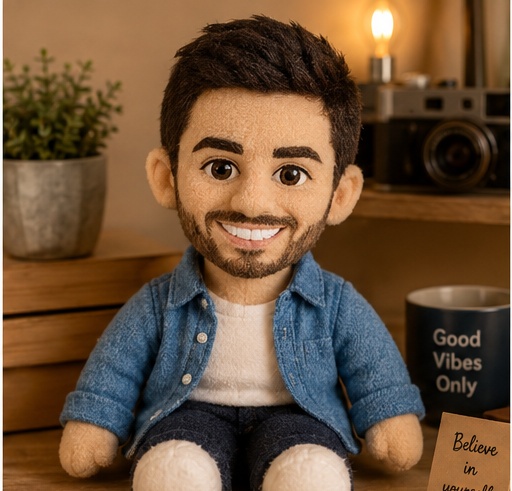
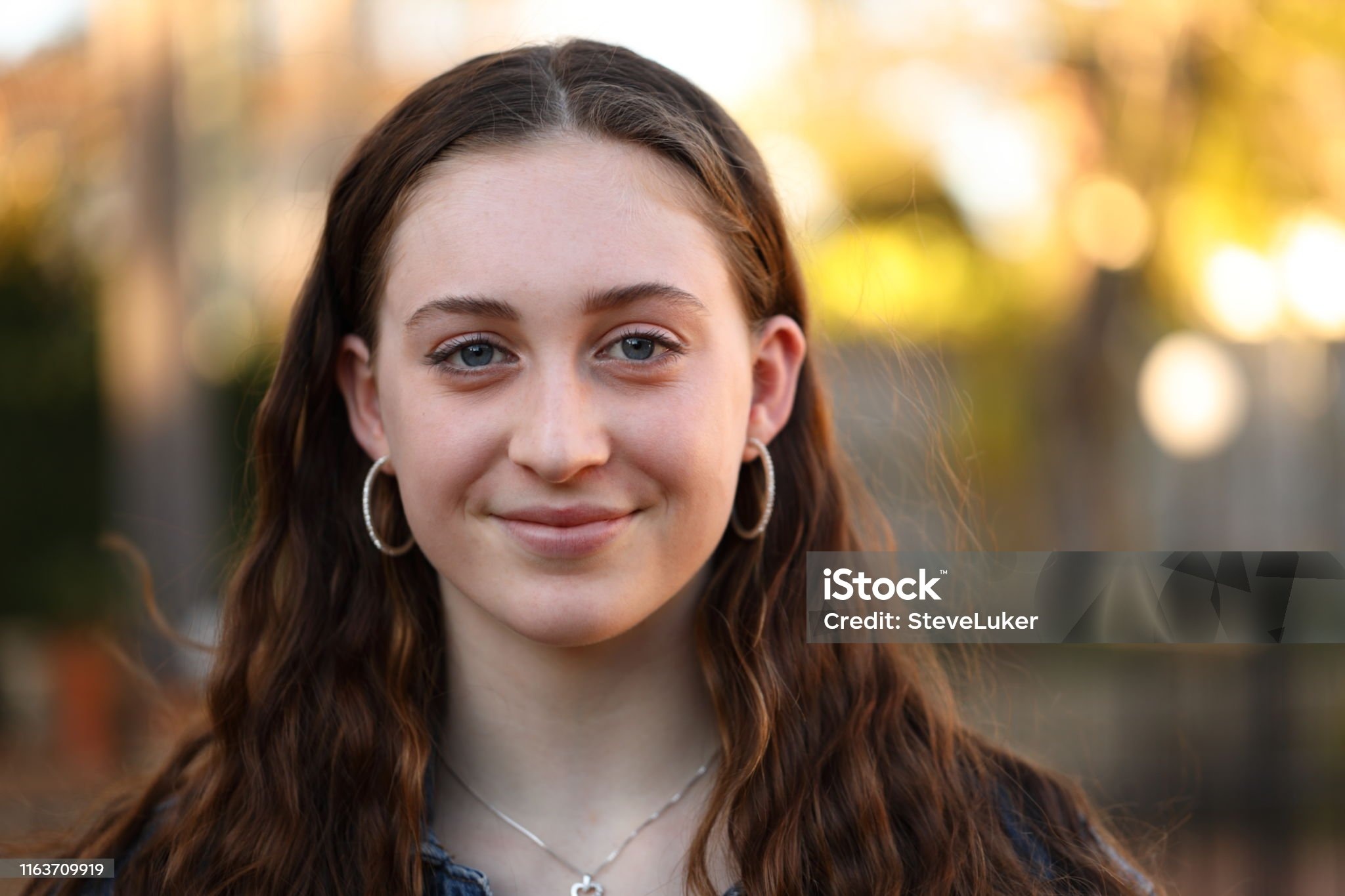
These three source/result examples show the generated plush toy results next to the original portraits. The comparison focuses on identity cues, hairstyle, outfit color, fabric texture, toy proportions, shelf staging, and warm product lighting.
Pair 1: portrait to cozy shelf plush
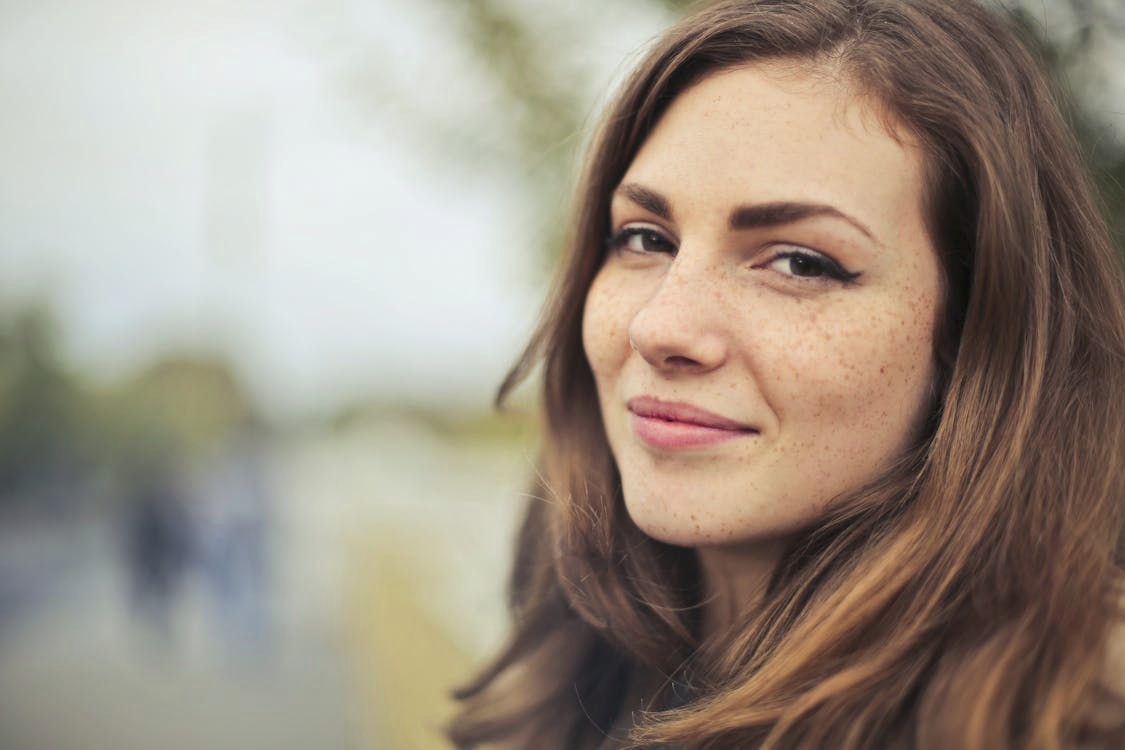
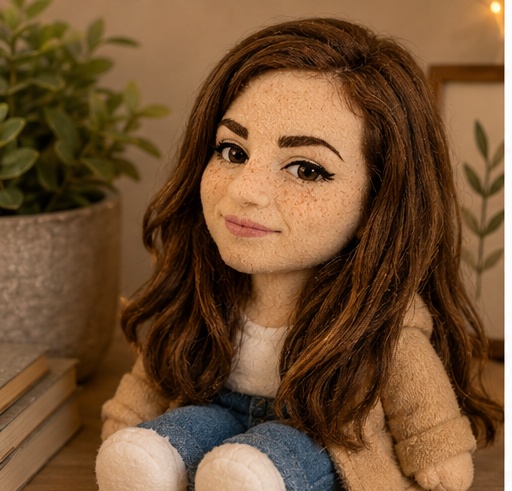
Pair 2: outfit color to plush fabric design

Pair 3: recognizable person to collectible toy photo
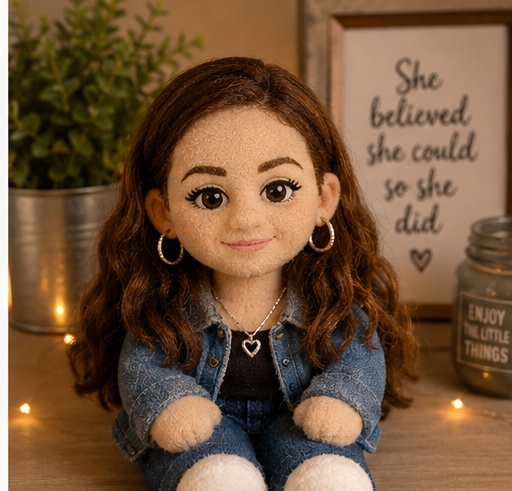
Why this prompt works
The prompt works because it defines both identity preservation and material transformation. It tells the model what to keep from the uploaded person, then gives concrete plush-toy cues: fuzzy fabric, stitching, embroidery, rounded proportions, shelf placement, and warm studio lighting.
Best source photo
- Use a clear adult portrait with visible hairstyle and outfit colors.
- Choose a reference where the face is not too small or heavily obscured.
- Keep accessories, glasses, jackets, or color blocks visible if they matter to recognizability.
- A simple background helps the model focus on the person-to-plush transformation.
Prompt structure
The prompt has four jobs: preserve the person's identity cues, convert the body into plush toy proportions, describe the fuzzy stitched material, and stage the result as a warm collectible product photo on a cozy shelf.
How to adjust this prompt
- Add "embroidered eyes" or "button-like nose" if the face looks too realistic.
- Add "less cluttered shelf" if the background distracts from the toy.
- Add "stronger outfit color match" if the clothing drifts too far from the reference.
- Add "premium product catalog photo" if the output looks like a casual render instead of a finished collectible.
FAQ
Can this preserve the person?
It can preserve broad visual cues such as face shape, hairstyle, outfit colors, expression, and accessories. It should not be treated as identity verification.
Which aspect ratio works best?
A square or near-square frame works well for a toy sitting on a shelf. Use 4:5 if you want more vertical shelf space.
Why mention product photography?
Product-photo language helps the result look staged, clean, warmly lit, and collectible instead of like a random toy render.
What should I avoid?
Avoid asking for realistic human skin, glossy plastic, horror doll styling, brand logos, or cluttered text labels if you want a soft plush result.
Related internal links
- Portrait prompts for more person-based transformations.
- Before/after examples to compare source photos with generated results.
- AI image prompt generator for building new image prompts.
- Negative prompts for reducing artifacts and bad anatomy.
What kind of photo works best?
Use a clear adult portrait where the face, hairstyle, outfit colors, and accessories are visible. These cues help the plush toy stay recognizable.
How do I make the result look more plush?
Strengthen the material cues: fuzzy fabric, embroidered face, stitched seams, soft stuffing volume, rounded proportions, and matte textile texture.
Why place the toy on a shelf?
The shelf turns the result into a collectible product-photo composition with clearer scale, warm lighting, and a cozy display mood.
What if the result looks like plastic?
Add negative prompt terms for hard plastic, glossy vinyl, porcelain doll, realistic skin, and shiny toy render.